🇺🇸 CIA
Independent Press in the Baltics
Summary
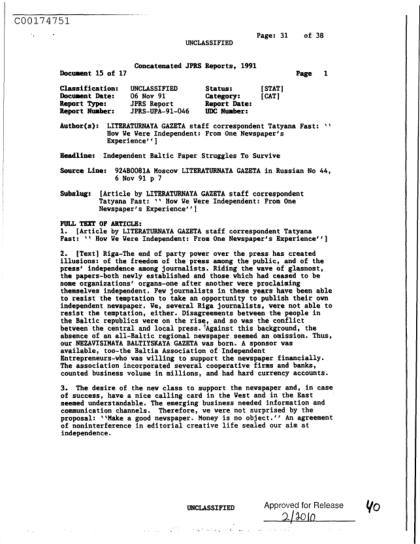
In the aftermath of communism's fall, journalists in the Baltics tried to establish independent media, free from party and state control. Yet, true independence proved elusive. While newspapers declared autonomy, they often relied on sponsors with their own agendas. Tensions between editors and funders were constant. Sponsors expected influence, and sometimes outright control, over content. Meetings with backers resembled old-style party sessions, with instructions on how to write and what topics to avoid. Independence was often an illusion, as editors had to yield to financial pressures.
The path to genuine independent journalism was tough. Production costs, from paper to printing, were prohibitive. Without state subsidies, newspapers had to seek alternative income, like advertising or commercial supplements. Some resorted to selling products or services, others had to sell their own freedom. Independence seemed to be the privilege of the wealthy. While some publications survived through political or economic connections, others succumbed to pressure and closed. The struggle to maintain independence was not only ideological but also economic, and not always winnable.